
The Latrobe Valley Subdivision Pipeline Just Tripled in 2026
Latrobe Valley property market activity has shifted decisively in 2026, with subdivision applications running at three times the 2023–2025 baseline.
The Latrobe Valley is in the middle of its most active residential subdivision cycle in over a decade. Latrobe City Council’s planning register in the four weeks to 30 July 2026 shows a sustained run of multi-lot, multi-dwelling and staged subdivision applications clustered around Traralgon and Morwell — a noticeable step-change from the steady drip of single-dwelling applications that defined the 2023–2025 period. For anyone watching the regional Victorian housing pipeline, the Latrobe story is the one to read right now.
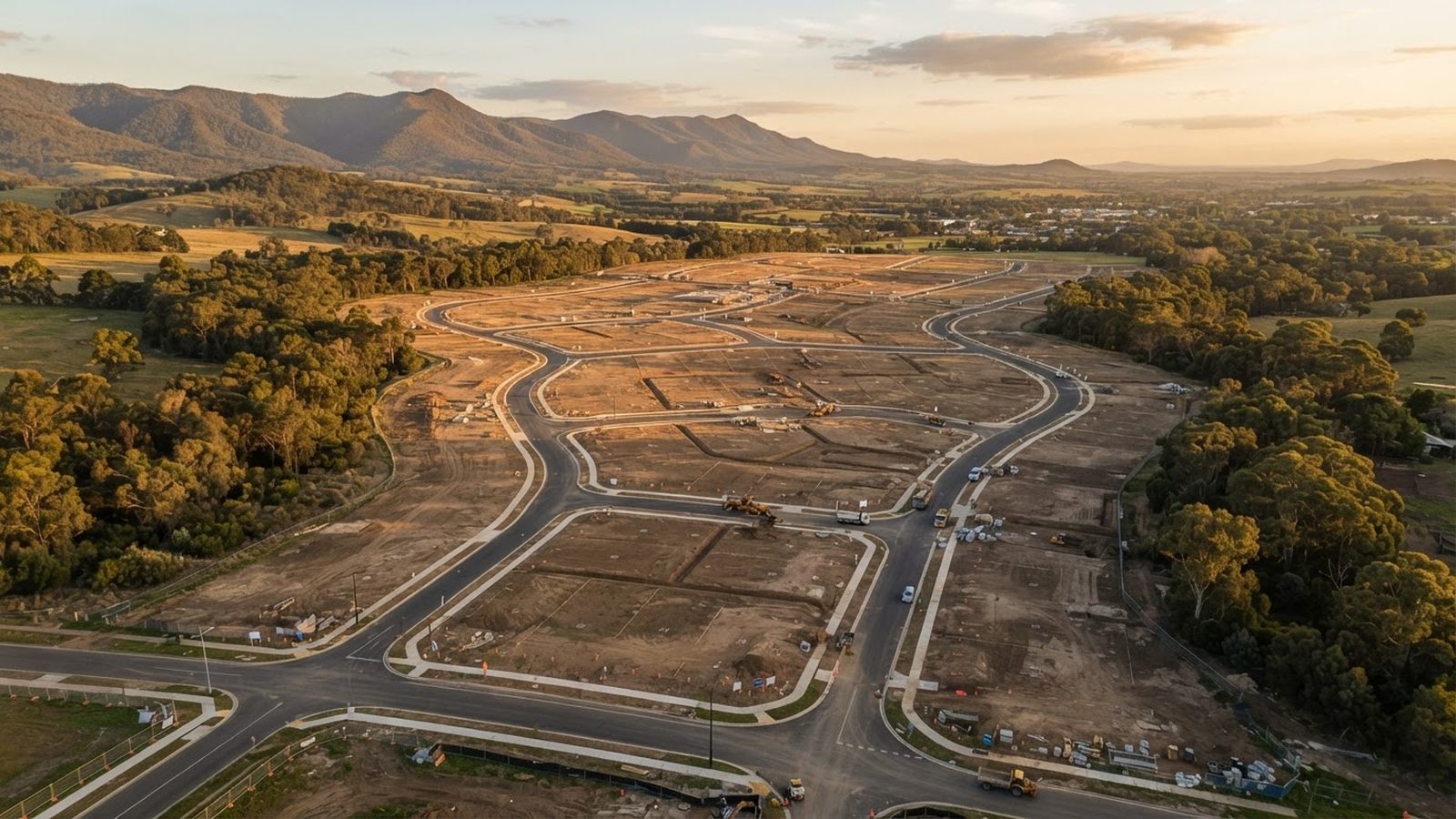
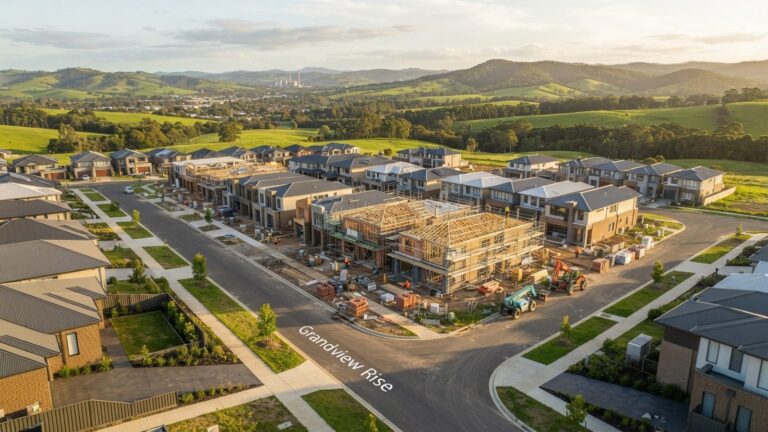
The biggest single signal is the 145-lot staged subdivision lodged at 27–47 Hazelwood Road, Traralgon. At 145 dwellings with staged delivery, native vegetation removal and easement variations, this is several times the scale of a typical Traralgon application — it sits in the same bracket as the major Traralgon East and Hazelwood North projects that defined the 2018–2020 build-out. On its own, the Hazelwood Road application would be a story; in combination with the rest of the July register, it points to a genuine pipeline.
What the July 2026 register actually shows
The Latrobe City Council advertised and notified applications (sourced from the Latrobe City ePathway planning portal and the Planning Alerts aggregator) over the last month break down into four distinct clusters:
- Staged greenfield subdivisions: the 145-lot Hazelwood Road, Traralgon project (mid-July), and a multi-lot staged subdivision with Transport Zone 2 access at Enterprise Drive, Morwell — on the 69-hectare vacant industrial-zoned corridor identified in the South Gippsland and Latrobe City Renewable Energy Impact and Readiness Study. The Enterprise Drive application signals a residential push into an industrial pocket, a policy shift worth watching.
- Higher-density infill in established Traralgon streets: four separate Clause 32.08-7 (two-or-more dwellings on a lot) applications on Hollywood Boulevard, Traralgon, plus a two-or-more-dwellings application at 116 Shakespeare Street, Traralgon, a Clause 32.08-7 dwelling at 40 George Albert Drive, Traralgon, a Clause 32.08-7 subdivision at 18 Greaves Lane, Traralgon, and a Clause 32.09 subdivision at 49 High Street, Traralgon. The Hollywood Boulevard cluster alone represents a four-dwelling townhouse-style density play in a single street.
- Rural-residential edge expansions: a multi-clause rural-residential subdivision at Old Melbourne Road, Maryvale with native vegetation removal and Transport Zone 2 subdivision triggers; a Clause 35.07-4 rural dwelling application at Huffers Lane, Rosedale (Wellington-side, but adjacent); and a four-lot rural-residential subdivision at 46 MacFarlane Street, Heyfield on the Wellington Shire border. The Maryvale application is the largest of these and points to demand pushing out from Traralgon into the Latrobe–Wellington fringe.
- Commercial and industrial mixed-use: a medical centre at 11 Deakin Street, Traralgon, a warehouse use at 320 Tramway Road, Hazelwood North, and a place-of-assembly application at 600 Yinnar Road, Yinnar. These aren’t residential but they support the same thesis: the Latrobe Valley is being recapitalised, not just subdivided.
Why now: the demand-side drivers stacking up
Three forces are lining up behind the Latrobe pipeline. First, the federal expanded 5% First Home Guarantee, announced with no income caps and no place limits, removes the deposit barrier for buyers who were previously locked out of the regional Victorian market. For Latrobe, where the median house price is well under the Victorian regional average, that scheme opens up a much wider buyer pool — and our recent First Home Buyer Gippsland 2026 guide broke down where sub-$500K stock is still available.
Second, the Cotality (formerly CoreLogic) regional indices continue to print positive annual growth across the Latrobe Valley, with our Latrobe-Gippsland growth market pulse post earlier this month noting Wellington and Latrobe as the two Gippsland LGAs leading the regional Victorian pack. Developers respond to confirmed annual growth with land-banking, which is what these staged subdivisions are.
Third, infrastructure tailwinds: the Princes Highway duplication through Traralgon, the Traralgon bypass upgrades, and the Latrobe Valley Authority’s ongoing investment in the Morwell revitalisation program are all lowering the development risk premium. A planning permit that would have sat on a shelf for two years in 2022 is now being acted on within twelve months.
What this means for Gippsland buyers and sellers
If you are buying in the Latrobe Valley in the second half of 2026, expect:
- More townhouse and medium-density product hitting Traralgon’s established streets, particularly in the inner-ring suburbs within a 10-minute drive of the CBD. The Hollywood Boulevard cluster is the leading indicator — expect similar applications on adjoining streets.
- Staged land releases at Hazelwood Road that will deliver 145 build-ready lots over the next three to five years. The first stage lots are typically the cheapest — buyers who can wait for stage two or three will see softer pricing.
- A modest softening of land prices in Traralgon East and Hazelwood North as new supply comes online, even if established dwelling prices continue to firm. Land is the lever developers pull first when supply loosens.
- Wider choice in the $400K–600K band, which is where most of the Latrobe pipeline product will land. This is the price band that the expanded 5% deposit scheme unlocks most cleanly.
If you are selling a Traralgon house in 2026, the medium-term risk is a softening of the land-value premium that buyers have been paying for knockdown-rebuild candidates. Existing houses on subdivided dual-occupancy lots will hold their value; houses on larger blocks in the path of the new subdivisions will see more competition for that knockdown premium. For a deeper read on how to read price signals in the regional market, see our price-drop signal guide.
The wider Gippsland context: not just Latrobe
The Latrobe story doesn’t sit in isolation. Across Wellington Shire the planning register on the same date shows 46 advertised applications — a roughly steady run of two- and three-lot subdivisions in Sale, Rosedale and Stratford, but with bigger rural-residential applications at Heyfield, Tinamba and Briagolong. The 145-lot Hazelwood Road application is roughly ten times the average Sale or Stratford subdivision size, which is what makes the Latrobe pipeline genuinely unusual.
For East Gippsland buyers watching the same cycle, the comparison is also instructive: the East Gippsland advertised planning permits post we ran in July showed a different mix, skewed toward tourism and lifestyle/large-lot rural rather than suburban subdivision. The Latrobe pipeline is a working-family, owner-occupier pipeline. East Gippsland is still a lifestyle-and-second-home pipeline. Both are valid models, but they have very different price trajectories and buyer demographics.
The Latrobe lifestyle–acreage overlap (Jeeralang Junction, Tyers, Yinnar South) is one of the few places where both markets meet — and it is where the East Gippsland lifestyle trio of Eastwood, Shannon Waters and Nicholson sits as a useful comparison set for buyers weighing a denser Traralgon townhouse against a smaller-lot lifestyle block. The arithmetic in 2026 favours the Latrobe subdivision for capital growth in the next three years; the lifestyle blocks win on holding-cost resilience if the regional cycle softens.
What we’re watching next
The next signal to track is the Traralgon Townhouse Pipeline (covered in our 16 July Latrobe Valley development wave post): if the Hollywood Boulevard applications and the 145-lot Hazelwood Road subdivision are both approved within the same quarter, expect at least one further 100+ lot subdivision application before the end of 2026. The Morwell Enterprise Drive application, if it crosses from industrial to residential, would be the more interesting development-policy story of the year.
For now, the Latrobe Valley subdivision register is the most concrete supply-side evidence that the regional Victorian housing pipeline is no longer a Morwell-and-Traralgon afterthought. It is becoming the story.
Related Coverage
- Traralgon’s Townhouse Pipeline Is Finally Turning On (16 Jul 2026)
- Latrobe-Gippsland Property Just Had Its Best Quarter in Five Years (26 Jul 2026)
- First Home Buyer Gippsland 2026 (15 Jul 2026)
- When Property Prices Drop in Gippsland (13 Jul 2026)
- Three East Gippsland Lifestyle Buys: Eastwood, Shannon Waters and Nicholson (26 Jul 2026)
Proudly supported by hello-clarence.com
One Comment