
Lucknow’s 600-Home Pipeline: East Gippsland’s Next Growth Front
East Gippsland’s property market has spent 2026 running on a simple tension: firm demand for well-located homes, and a land supply that arrives in fits and starts. Nowhere is that tension clearer right now than at Lucknow, on Bairnsdale’s eastern doorstep, where a long-planned precinct is being repositioned as the region’s next big housing front — up to 600 new homes at Lanes Road, and a funding question that will decide how quickly they arrive.
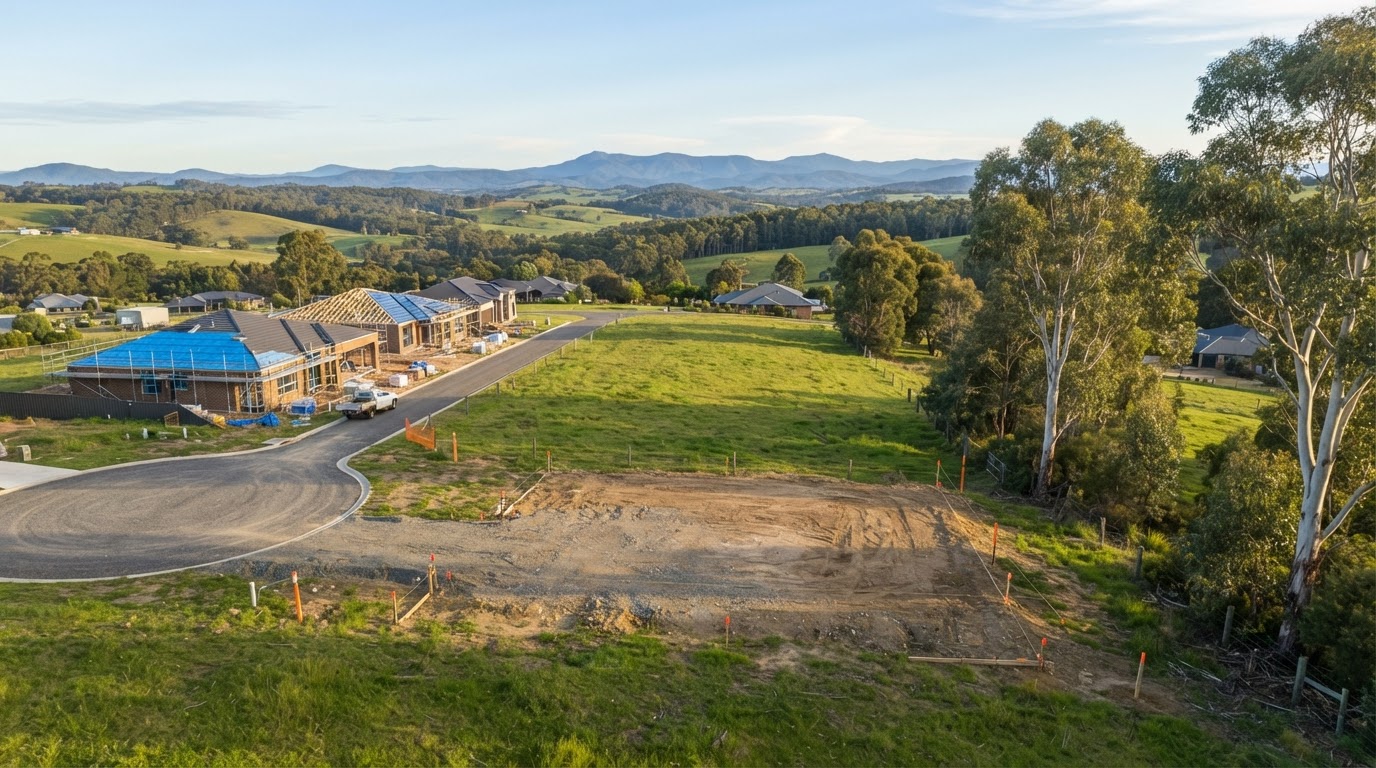
What the Lanes Road precinct actually is
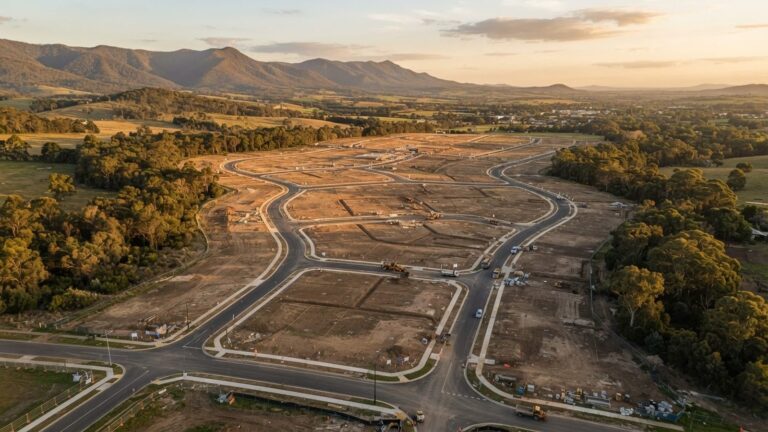
The East Bairnsdale/Lucknow Precinct Structure Plan (PSP) was first endorsed back in 2013. It sets out how the precinct should be developed — where housing goes, how services connect, and how drainage and environmental values are managed — and it underpins the rezoning that turns under-used land into residential lots.
In August 2026 Council released an updated draft (version 7, dated 18 August) and put it in front of the community. Information sessions were held at the Lucknow Football Netball Club on Wednesday 26 August and Monday 14 September, with written questions accepted until midday on 18 September. That consultation window has now closed and the plan is being finalised. The number that matters: up to 600 new homes are expected within the Lanes Road precinct alone.
You can read the updated plan on the Your Say East Gippsland project page.
The $4 million drainage question
Land can be zoned residential and still be years away from a building permit. At Lucknow the blocker is stormwater. The precinct floods, and without an engineered drainage network the lots simply cannot be responsibly developed.
In August, Council escalated the issue to the state election campaign, calling on all parties and candidates contesting November 2026 to commit $4 million toward drainage infrastructure. The proposed works include an engineered drainage network, new stormwater basins and pipes, and water-sensitive urban design to slow and treat runoff. Council argues the benefits run well beyond the building industry: better-managed flows reduce local flooding and improve downstream water quality in the Gippsland Lakes. The full case is set out in Council’s media release on unlocking Lucknow.
Why it matters for the East Gippsland property market
The Lucknow pipeline is the most visible piece of a much larger supply jigsaw. The pressure points are familiar to anyone watching the region:
- State target: 11,000 new dwellings in East Gippsland by 2051 under Plan for Victoria — a figure the shire cannot meet without large precincts such as Lanes Road coming online.
- Recent approvals: around 361 residential dwellings were approved across East Gippsland in FY2025-26, the signature of a market constrained less by demand than by serviced-land supply.
- Jobs and amenity: the precinct sits beside established housing, community and sporting facilities, and major employers including Patties Foods — the fundamentals that support buyer confidence.
- Affordability: every 100 lots that reach the market relieves pressure on established stock and gives local buyers a genuine alternative to competing for the same resale homes.
The serviceable-land catch
Here is the part buyers need to hear plainly. A structure plan is not a title. Between an updated PSP and a finished, fenced, sewer-connected lot sit funding agreements, planning scheme amendments, subdivision permits and construction. The Lucknow pipeline is real and significant, but it is a 2027-and-beyond story rather than a 2026 one — the same time lag that has kept the region’s 35-year land supply debate running.
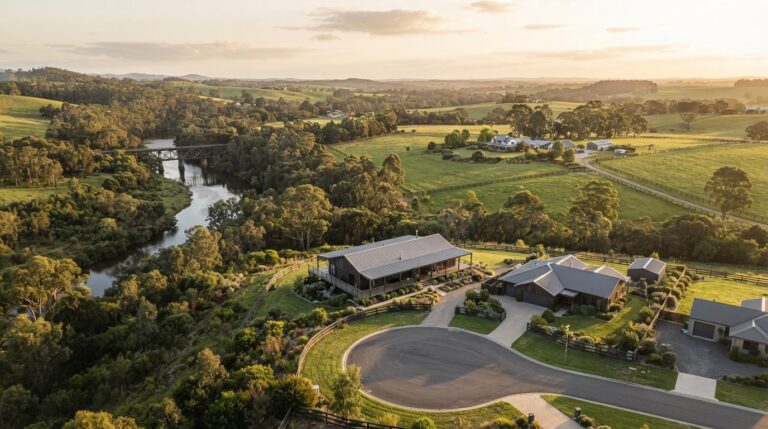
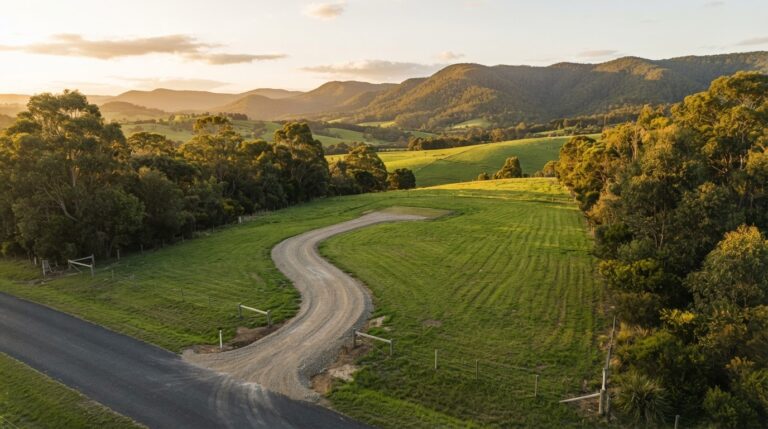
For anyone wanting land now rather than land promised, the region’s already-titled, serviced stock remains the pragmatic entry point. Nicholson, about 10 km east of Bairnsdale along the Princes Highway, is the clearest example. Elevated blocks in established cul-de-sacs — the kind of setting found around Floreani Place at Nicholson River Estate — are serviced, titled and build-ready, with the suburb’s vacant-land median sitting around $222,000 and house-and-land packages from the mid-$600,000s. It is the same lifestyle proposition Lucknow is chasing, available today rather than after the next funding round.
The wider East Gippsland development map
Lucknow is not the only front open across the shire:
- Lakes Entrance Northern Growth Area (Amendment C161egip): roughly 1,500 dormant zoned lots, submissions closed 21 September 2026 and now in Council consideration.
- Eagle Point (C171egip) and Paynesville (C172egip): structure plans now gazetted, framing modest, character-led residential growth in the lakes corridor.
- C165egip corrections: 119 properties re-drawn to resolve zoning and overlay anomalies, gazetted 13 August 2026.
- East Bairnsdale/Lucknow PSP: finalisation due once consultation feedback is reviewed and the plan is signed off.
The pattern is consistent — East Gippsland is quietly assembling a multi-front land pipeline, as the permit register has been signalling all year.
What to watch next
- State election commitments (November 2026): whether the $4 million drainage ask at Lucknow is funded.
- PSP finalisation: the updated East Bairnsdale/Lucknow plan will formalise lot yields, staging and infrastructure triggers.
- C161egip: Council’s next step on the Lakes Entrance growth area after the 21 September submissions close.
- Spring selling data: whether the region’s split market — firm Wellington, steadier East Gippsland — shifts as new supply signals land.
The bottom line
East Gippsland’s supply story is maturing from promise to pipeline. Lucknow’s 600 homes are the headline, but the practical question for buyers is unchanged: land that is titled and serviced today still trades at a premium to land that is only planned. That gap — between the precinct on the drawing board and the block you can build on this summer — is where most of the region’s 2026 activity is happening, and it is the split our Spring 2026 market analysis flagged across both shires.
One Comment